


Check the weather before heading to the stable and it might say 12°C all afternoon.
Sounds simple enough.
Until you start mucking out and get warm. Then you tack up in a cold breeze. Ten minutes into your ride, your jacket is too much. And by the time your horse has cooled down, you are the one feeling cold again.
That is the problem with dressing for the stable in autumn: the temperature only tells you part of the story.
What really matters is what you are going to do.
The best autumn riding outfit is not one that keeps you warm all day. It is one that changes with you. That is where layering comes in.
One stable day, several different outfits
A normal day with horses can involve completely different levels of activity.
You might start by cleaning a stable, spend an hour riding and finish by standing still beside the arena. One heavy jacket might work for one of those moments, but not for all of them.
That is why we like to think of autumn dressing as a simple system:
-
Start with what you want to ride in
-
Add warmth you can easily remove
-
Finish with protection for the weather
Not every day requires all three.
Start with the layer that stays on
Your base layer is what remains when everything else comes off, so it should be something you genuinely want to ride in.
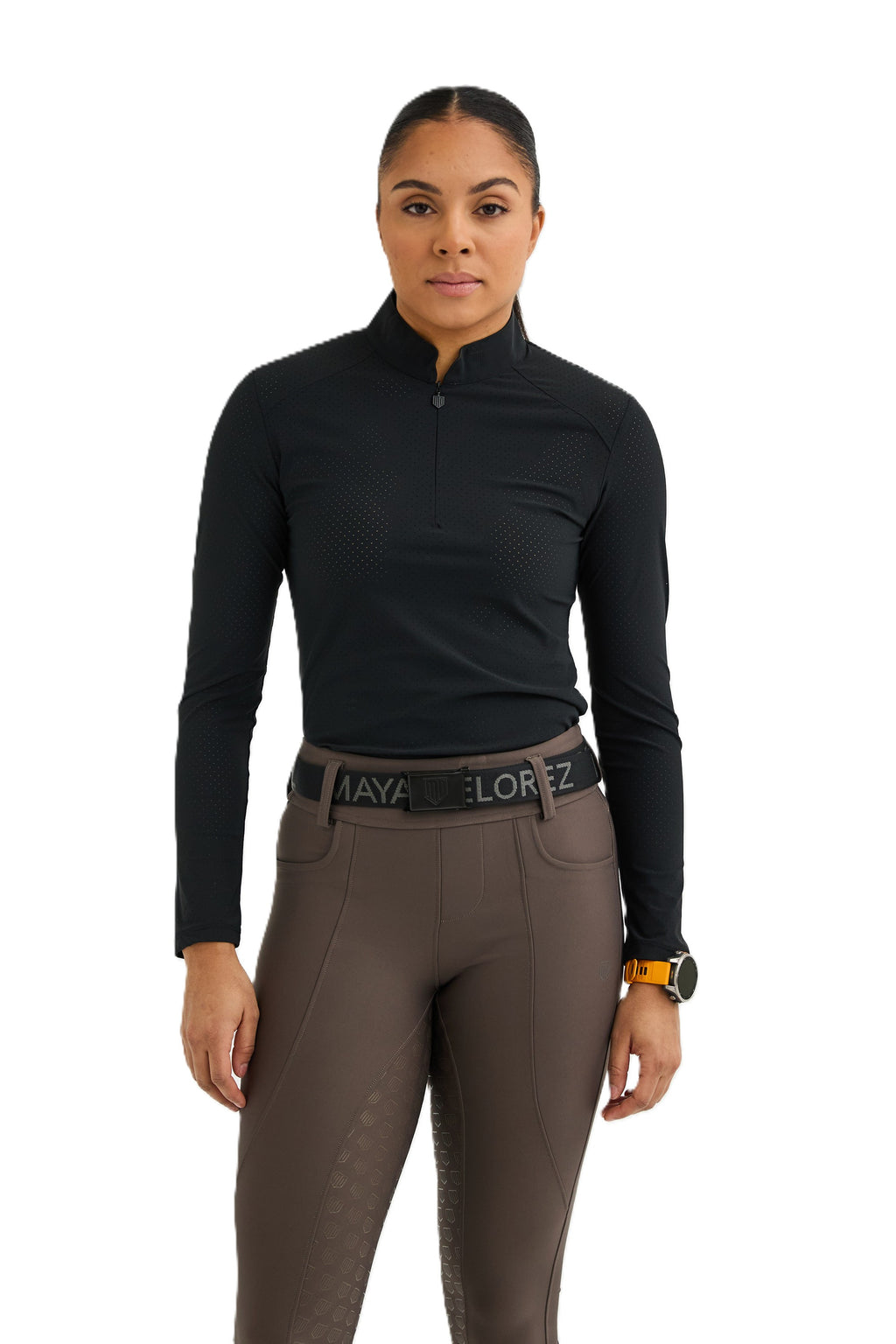
For an intensive session, breathability is especially important. A technical top such as the Maya Delorez Full Air Mesh Top can work well as a first layer thanks to its lightweight, ventilated feel.
Technical riding tops from brands such as Samshield and Equiline can play a similar role.
A useful question to ask is: would I still feel comfortable finishing my entire ride in this top?
If not, reconsider your base layer.
Add warmth without unnecessary bulk
Your midlayer should keep you comfortable before and after riding without becoming restrictive once you start moving.
A functional cardigan or lightweight sweater from the BOSS Equestrian fall winter collection can work well here. Collections from Vestrum, Samshield, Equiline and Dada Sport also offer pieces suited to this middle position.
Avoid choosing only for warmth.
A thick sweater may feel perfect while grooming, but less practical once it sits underneath a jacket and you pick up your reins.
Your layers should move with you.
The useful in-between layer
Some autumn days are too chilly for just a sweater, but too mild for a full jacket.
That is where a gilet becomes useful.
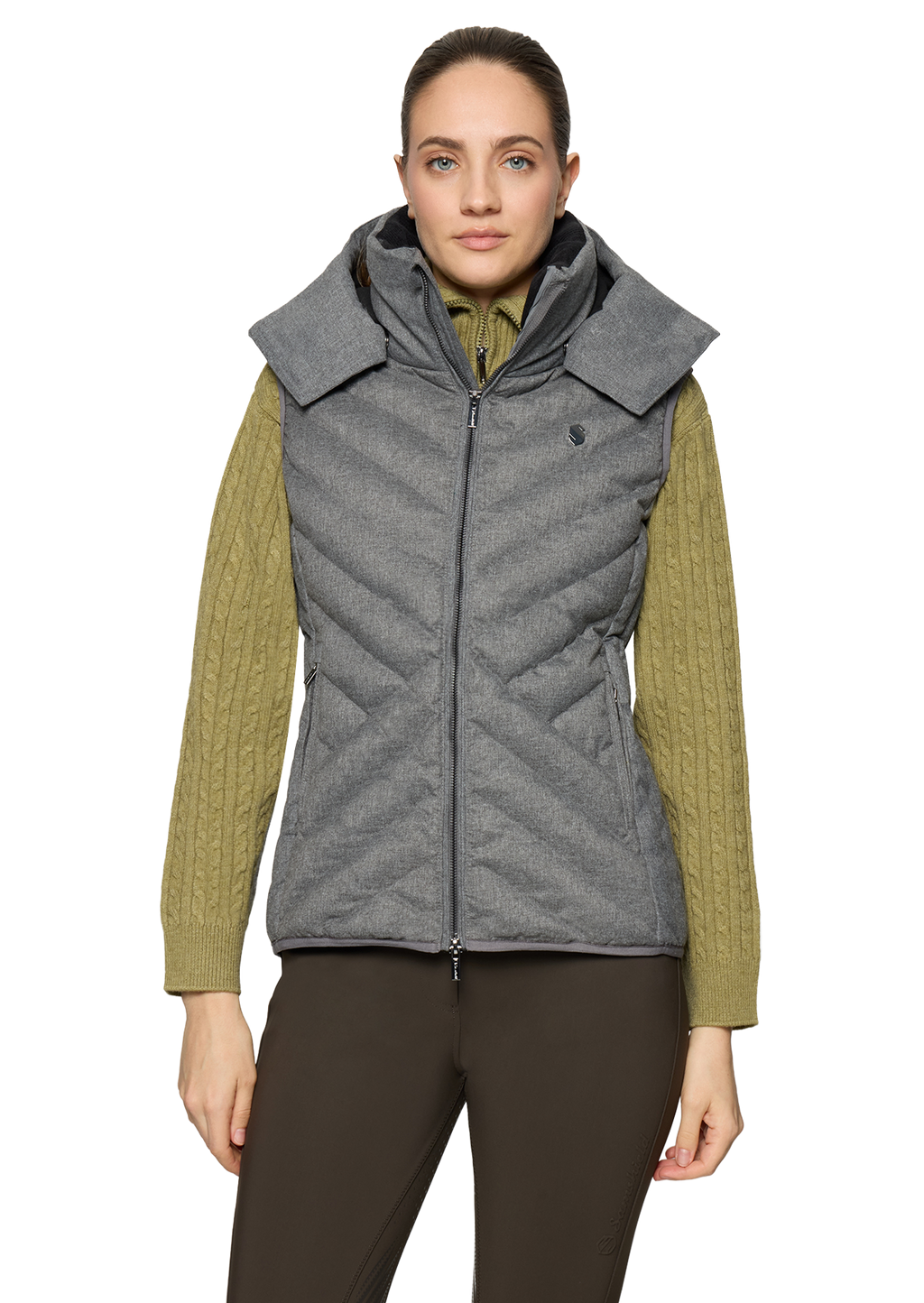
It keeps your core warmer while leaving your arms free, making it practical for grooming, stable work and riding. A Samshield gilet, for example, can be worn over a technical riding top or combined with another midlayer when temperatures drop.
It is one of those pieces that works across several different autumn conditions.
Choose your jacket for your day
It is autumn, so you need your winter jacket.
Not necessarily.
Ask what you actually need protection from. Cold? Wind? Rain? Or simply standing still for a long time?
For riding, lighter jackets from brands such as Samshield, Equiline or Vestrum can offer extra protection without becoming too heavy.
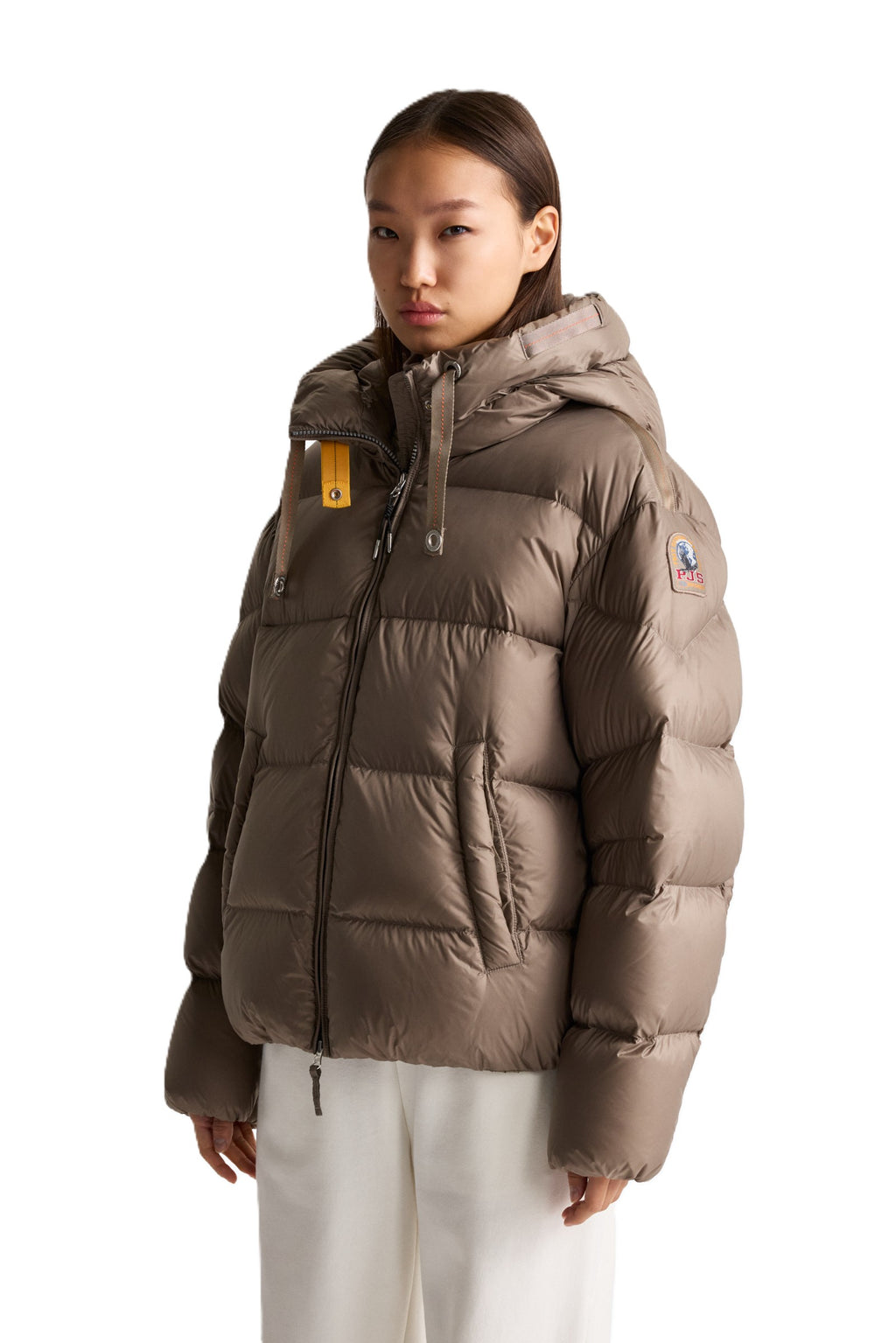
For cold competition days or long hours outside the saddle, warmer outerwear becomes more useful. This is where Parajumpers styles such as the Tilly, Long Bear and Ugo can fit into your stable wardrobe.
The goal is not to wear the warmest jacket.
It is to wear the right layer for what you are doing.
What are you doing at 10°C?
This is often a more useful question than asking what to wear at a certain temperature.
An intensive jumping lesson at 10°C requires something very different from a quiet hack or an afternoon watching classes.
For a harder training session, start lighter and make sure your extra layers are easy to remove.
For a quiet ride, you may want to keep a gilet or lightweight jacket on for longer.
For a competition day, think beyond your time in the saddle. Waiting, walking courses and standing beside the arena can make warm outerwear just as important.
The weather forecast should be the start of your outfit decision, not the end of it.
Stop buying outfits. Start building combinations.
A useful autumn wardrobe is not necessarily a large one.
It is one where the pieces work together.
A technical riding top can be worn alone for training, combined with a BOSS Equestrian cardigan on a cooler day or layered underneath a Samshield gilet or jacket.
Use the same thinking when exploring new collections from Vestrum, Equiline, Dada Sport or Maya Delorez.
Instead of only asking, “Do I like this?”, ask:
“Where does this fit into what I already own?”
If you have plenty of sweaters but always get too warm during training, another sweater may not be what you need. A better technical base layer could be more useful.
If you are comfortable while riding but always cold afterwards, your outer layer may be the missing piece.
That is a smarter way to shop a fall winter collection.
Remember what happens after your ride
Layering is useful after training too.
You may feel warm while untacking, but cool down quickly once you stop moving. Keep the layer you removed before riding nearby so you can put it back on afterwards.
At the same time, pay attention to your horse.
Autumn is a transition period, and how quickly your horse cools after exercise depends on factors such as coat, clipping, workload and weather.
Check your horse after training and give them time to cool down comfortably. Depending on the individual horse and conditions, an appropriate cooler or rug may be useful.
Ready for changing stable weather
Good layering is not about wearing more clothes.
It is about being able to adapt.
Start with a breathable layer you genuinely want to ride in. Add warmth where needed and choose your outer layer for the weather and your plans.
From technical riding layers by Maya Delorez, Samshield and Equiline to midlayers from BOSS Equestrian and Vestrum and warmer outerwear from Parajumpers, the latest fall winter collections at Emmers Equestrian make it easier to build a wardrobe around real stable life.
So next time you check the autumn forecast, do not just ask how cold it will be.
Ask what your day with your horse is going to look like.
Frequently asked questions about layering for horse riding
What should I wear when riding my horse in autumn?
Start with a breathable riding top and add a removable midlayer, gilet or jacket depending on the weather and your activity level.
What is the best base layer for horse riding?
Choose something lightweight, breathable and flexible enough to ride in on its own. Technical materials that manage moisture are especially useful for intensive training.
How many layers should I wear when horse riding?
There is no fixed number. Your activity matters just as much as the temperature. Some days require only a base layer and midlayer, while colder conditions may call for an additional outer layer.
Is a gilet useful for horse riding?
Yes. A gilet keeps your core warmer while leaving your arms relatively free, making it useful during transitional weather.
Can you ride in a winter jacket?
Yes, as long as it allows enough freedom of movement and does not interfere with your position in the saddle. For intensive riding, lighter removable layers can often be more practical.
What should I bring to the stable on a changeable autumn day?
A breathable riding top, one removable midlayer and a weather-appropriate outer layer will give you enough flexibility for most autumn stable days.


