


When choosing a new riding helmet, it is easy to start with the way it looks. A wide peak or a more classic shape? Something subtle for everyday riding or a helmet that stands out in the show ring?
But there is one question that should come before all of that: does it actually fit your head?
A riding helmet can offer advanced safety features and plenty of comfort, but the right fit remains essential. And because every head is different, the KASK helmet you like most is not automatically the one that will fit you best.
So before choosing between models such as the KASK Kooki, Dogma or Star Lady, start with the fit.
Your helmet should move with you, not on you
This is one of the easiest ways to recognise a good riding helmet fit.
Put the helmet on and gently move it from side to side. If it fits correctly, the skin on your forehead should move with the helmet. The helmet itself should not easily slide across your head.
Now look down, turn your head and gently shake it from side to side. The helmet should remain stable without shifting backwards or forwards.
A riding helmet should feel snug around your entire head, but not uncomfortable. Strong pressure around the forehead or temples can indicate that the shape is not right for you.
This is why head circumference is only a starting point. Head shape matters too.
Kooki, Dogma or Star Lady? Fit comes first
Once you know what a correctly fitted helmet should feel like, you can start comparing different KASK riding helmets.
At Emmers Equestrian, you will find models including the KASK Kooki, Dogma and Star Lady.
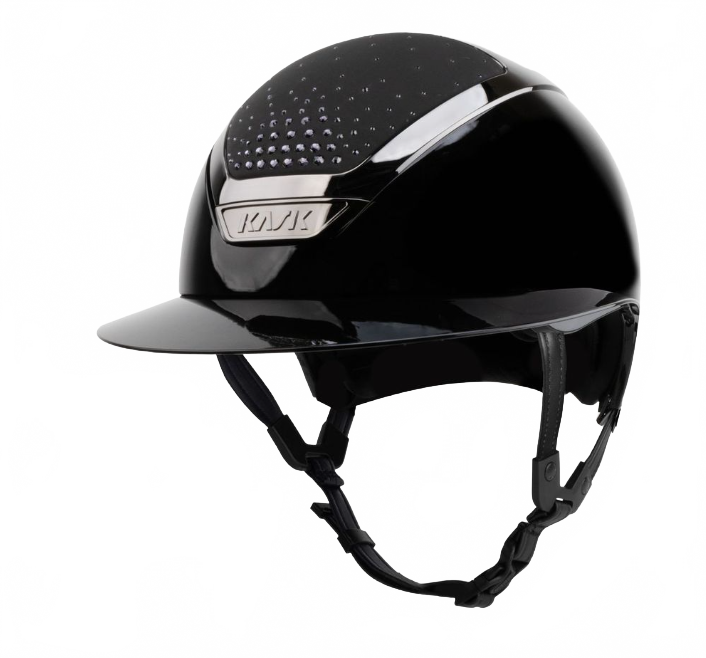
The Kooki offers a clean, modern look for training and competition, while the Dogma has a recognisable classic KASK silhouette. The Star Lady stands out with its wider peak, which can be particularly appealing for riders spending plenty of time outdoors.
But these differences should come after fit, not before it.
You may walk into the store with one model in mind and discover that another simply sits better on your head. That is exactly why trying different helmets can make such a difference.
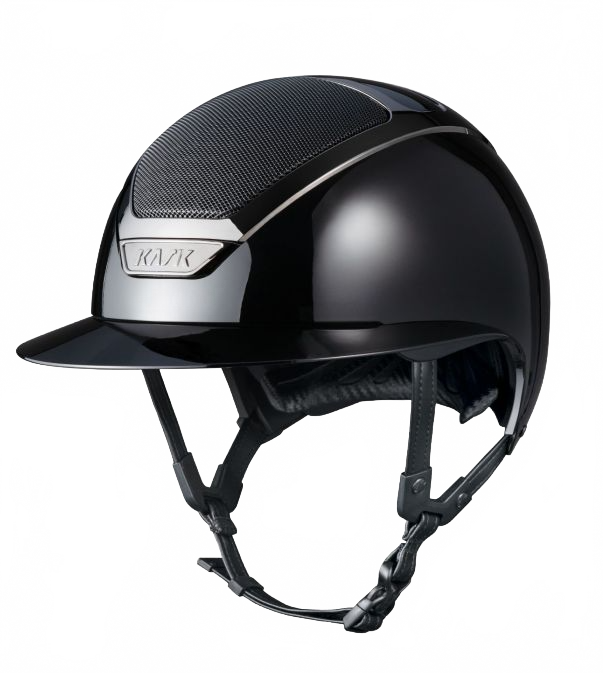
Check the position of your helmet
A correctly fitted KASK riding helmet should sit level on your head rather than tilting backwards or dropping too far forward.
Your forehead should be properly covered while your vision remains clear. If you can easily push the helmet backwards or it changes position when you look down, the fit needs another look.
And remember: tightening the chin strap should not be the solution for a helmet that is too loose. The helmet itself should already sit securely around your head.
Your hairstyle is part of the fit
How you wear your hair can change the way your helmet sits.
Try on your KASK helmet with your hair as you normally wear it when riding. If you wear your hair differently during competitions, take this into account as well.
KASK also offers fitting solutions designed to accommodate hairstyles such as a low ponytail. It may seem like a small detail, but even small changes can affect the stability and comfort of your helmet.
Take your time when trying on a KASK helmet
Do not judge a riding helmet within thirty seconds.
Keep it on for several minutes. Walk around, look up and down and move your head. This gives pressure points time to become noticeable and helps you see whether the helmet really stays in place.
Think about your actual riding routine too. A helmet should not only feel comfortable in the fitting area, but also during a full training session, competition or long day at the stable.
When should you check the fit again?
Finding the right KASK helmet does not mean you never have to think about fit again.
If your helmet starts moving more than before, feels different or no longer stays in the same position while riding, check the fit again.
After a significant impact or fall involving your helmet, its condition should also be taken seriously, even when you cannot immediately see damage from the outside.
A riding helmet is safety equipment first.
Buying a KASK riding helmet online or in-store?
If you already know which KASK model fits your head correctly, shopping online can be convenient.
If you are choosing your first KASK helmet, trying different options can be valuable. Measurements provide a starting point, but actually wearing a helmet tells you much more about pressure, stability and overall comfort.
At Emmers Equestrian, you can discover KASK riding helmets online or visit one of our stores for personal helmet fitting and advice.
Frequently asked questions about KASK riding helmet fit
How tight should a KASK riding helmet be?
Your helmet should feel snug around your entire head without creating painful pressure points. When you gently move it, the skin on your forehead should move with the helmet.
How do I know if my riding helmet is too big?
If the helmet easily moves from side to side, slides backwards or changes position when you look down, it may be too loose.
Does my hairstyle affect the fit?
Yes. Hair underneath or around your helmet can change the fit. Try your helmet with the hairstyle you normally use when riding.
What is the difference between the KASK Kooki, Dogma and Star Lady?
The models differ in design and features. The Star Lady is recognisable by its wider peak, while the Kooki has a clean, modern design. Rather than choosing purely based on appearance, consider which helmet works best for your head and riding preferences.
Should I try on a KASK helmet before buying?
Especially for your first KASK riding helmet, trying it on is recommended. Your measurement is useful, but your head shape and the overall fit ultimately determine how securely and comfortably the helmet sits.


